Physical Address
304 North Cardinal St.
Dorchester Center, MA 02124
Physical Address
304 North Cardinal St.
Dorchester Center, MA 02124
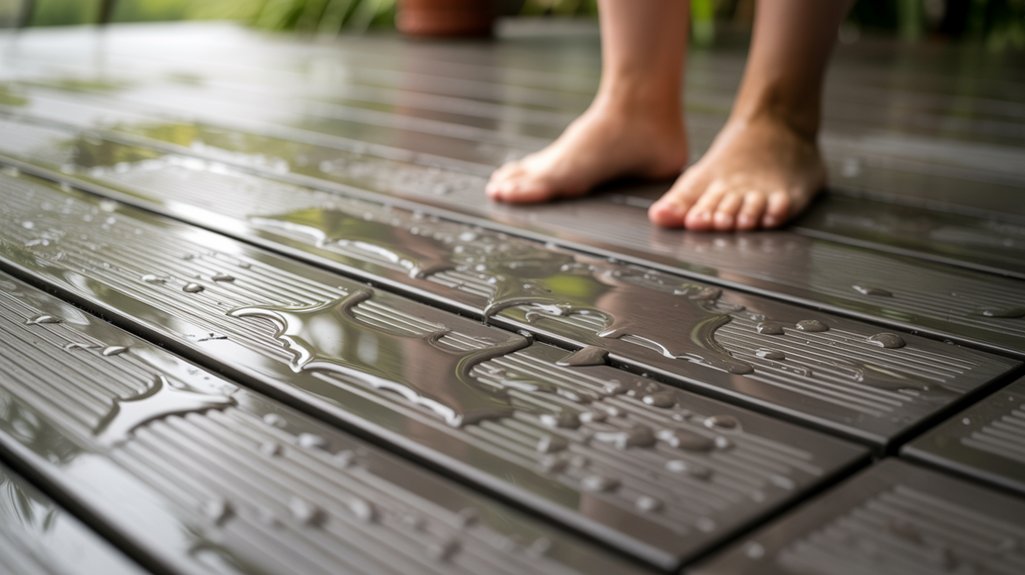
Here's what you need to know about composite decking's wet-surface traction before your next outdoor project surprises you.
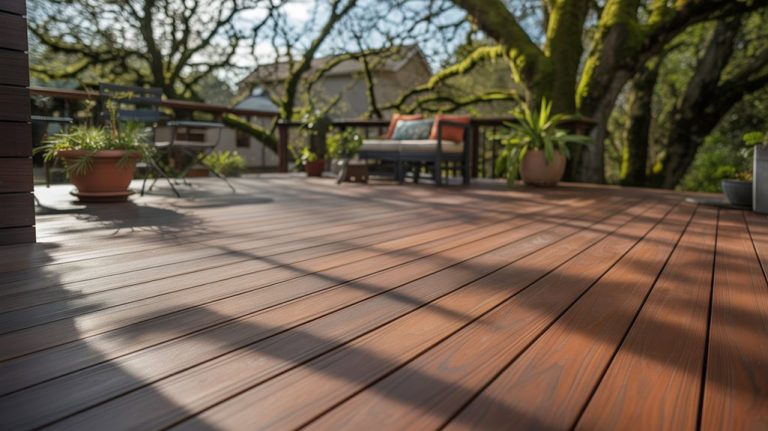
Co-extruded composite decking performs substantially better underfoot when wet than smooth-surfaced wood, owing to embossed or brushed textures evaluated under ASTM D7032 slip-resistance protocols. In San Antonio’s pool-season humidity and convective rain patterns, untreated wood surfaces develop algae and biofilm that sharply reduce traction. Co-extruded composite decking is a structural outdoor surface product encasing a wood-fiber core in a continuous polymer shell, engineered to resist moisture infiltration, biological growth, and surface degradation across extended wet-dry cycles.
Traction in modern composite boards isn’t incidental to their construction — it’s a direct consequence of how co-extruded profiles are manufactured, with surface texture pressed into the polymer shell at the point of formation rather than added as a secondary treatment. ASTM D7032 establishes the evaluative framework against which these surfaces are measured, and boards meeting its slip-resistance criteria under wet conditions do so partly because the sealed shell denies the moisture retention and biological substrate that allow algae to colonize smooth wood grain. Where untreated or unsealed wood develops a progressive biofilm that compounds its already-limited wet traction, the co-extruded shell interrupts that cycle at the material level.
ASTM D7032 establishes the performance standard that plastic composite deck boards must meet for slip resistance, requiring manufacturers to evaluate wet traction as part of a broader suite of mechanical and safety criteria. Co-extruded boards engineered with embossed or wire-brushed surface textures are purpose-built to satisfy this evaluation, with the continuous polymer shell allowing texture depth and pattern consistency that a natural wood surface cannot maintain once weathering, moisture cycling, and biological growth begin. In San Antonio’s pool-adjacent settings — where summer humidity and splash zones create persistent wet conditions across the roughly 250 days of annual sunshine — that surface geometry matters continuously, not only during rain events. The manufacturing process locks traction geometry into the outer shell itself, so the slip-resistance profile established at production remains structurally intact rather than depending on maintenance schedules or periodic refinishing.
Algae colonization of wood decking surfaces depends on the moisture retention and organic material that a porous, unsealed grain structure provides. Co-extruded composite boards enclose the wood-fiber core in a continuous polymer shell that denies algae the cellulosic substrate and sustained surface moisture on which biological growth depends. In San Antonio’s pool-adjacent environments — where splash zones maintain near-constant surface wetness across a long warm season bounded by a last frost around March 20 and a first frost around November 12 — that biological resistance is a structural traction consideration rather than an aesthetic one. Smooth wood, once colonized, develops a biofilm that wet-traction evaluations conducted under ASTM D7032 protocols are specifically designed to detect, and unsealed surfaces have no inherent mechanism to interrupt the colonization cycle between maintenance intervals.
Pool decks in San Antonio’s estate corridors operate under conditions that concentrate nearly every traction variable in one space: standing water, bare feet, and sustained surface temperatures that can exceed ambient air readings by a measurable margin on exposed boards. Drainage gap spacing and board orientation relative to pool coping determine how quickly water clears the surface, directly affecting the wet-slip performance that ASTM D7032 evaluates. Color selection carries equal consequence — lighter board tones reflect more solar energy, reducing surface heat at foot level during August afternoons when air temperatures approach 96°F and barefoot comfort becomes a functional design constraint rather than an aesthetic preference.
ASTM D7032 establishes slip-resistance evaluation criteria that composite deck boards must satisfy, making wet-surface traction a codified performance threshold rather than a discretionary design preference. Co-extruded boards achieve this through embossed or wire-brushed surface textures that displace standing water and maintain grip under foot traffic, a meaningful distinction from smooth wood surfaces that accumulate biofilm during San Antonio’s humid spring and early-fall convective seasons. Drainage gaps between boards—typically three-sixteenths to one-quarter inch in field installation—channel poolside splash and rain runoff away from the walking surface before saturation occurs. In a climate where NOAA normals record roughly 32.9 inches of annual precipitation concentrated in two convective seasons, and where pool decks endure barefoot traffic during August highs near 96 degrees Fahrenheit, the interaction of texture geometry, gap spacing, and surface temperature determines both safety and comfort across the usable season.
Dark-pigmented composite deck boards can reach surface temperatures exceeding 150 degrees Fahrenheit under direct summer sun, a thermal behavior that directly affects barefoot comfort and material selection on pool-adjacent installations in San Antonio’s climate. With August highs averaging near 96 degrees Fahrenheit based on NOAA climate normals for the region, radiant heat accumulation on horizontal deck surfaces compounds ambient air temperature in ways that smooth, dark boards amplify most severely. Co-extruded boards in lighter pigment ranges and variegated tone patterns reduce surface heat absorption without sacrificing the textured grip that ASTM D7032 slip-resistance criteria require. Orientation relative to prevailing afternoon sun exposure, combined with adequate substructure ventilation through consistent drainage gap spacing, further moderates the thermal load that barefoot pool traffic encounters across the long South Texas warm season.
Even well-specified composite surfaces encounter conditions that shift their performance profile. San Antonio’s convective downpours arrive fast and shed slowly across expansive clay soils, and when caliche dust films accumulate between rain events, they reconstitute into a fine slurry that briefly compromises surface texture regardless of the board’s embossed profile. Cleaning cadence, then, isn’t incidental maintenance—it’s a variable in the slip-resistance equation, and on elevated decks where IRC R312 mandates guards and compliant stair geometry, the consequences of neglecting that variable compound with height.
San Antonio’s spring and early-fall convective seasons deliver intense localized downpours that accelerate surface contamination cycles on any horizontal decking material. High-runoff conditions associated with the expansive Hydrologic Soil Group C and D clays prevalent across Bexar County suspend fine caliche particulate, which settles across deck surfaces as standing water evaporates and leaves a powdery, low-friction film. That film reduces measured wet slip resistance below the thresholds evaluated under ASTM D7032 testing, effectively negating the textured co-extruded surface geometry that provides pool-adjacent safety margins in clean conditions. A cleaning cadence aligned with convective storm frequency — rather than a fixed calendar schedule — preserves the surface performance characteristics that make composite decking appropriate for wet outdoor environments in South Texas.
IRC Section R312 requires guards on any walking surface elevated more than 30 inches above grade, with a minimum guard height of 36 inches and balusters spaced to reject passage of a 4-inch sphere. That threshold transforms the slip-resistance question from a surface materials issue into a compound structural and traction problem: a walker who loses footing on a wet composite deck surface near an unguarded or under-height perimeter faces a fall hazard that surface texture alone cannot mitigate. Pool-adjacent decks in estate-corridor neighborhoods such as The Dominion or Shavano Park frequently incorporate grade changes, raised spa platforms, or multilevel configurations that push portions of the deck above the 30-inch trigger. Stair nosings carry their own traction demands under the same convective-season contamination conditions described previously, making stair geometry and composite tread surface specification equally consequential to overall safety performance.
Pool-adjacent decking decisions in San Antonio’s climate compress several performance variables into a single material choice. Wet traction, algae resistance, surface temperature under direct sun, and the color-heat relationship each carry real consequences for barefoot use across the long South Texas pool season, where ambient conditions remain demanding well beyond what most testing protocols simulate. The questions most homeowners ask about composite slip resistance tend to converge on these four issues, and the answers are conditional enough to warrant precise framing rather than categorical assurances.
Composite decking engineered with textured co-extruded surfaces performs well in pool-adjacent applications across San Antonio’s estate corridors, where humid subtropical conditions and heavy pool use demand reliable wet-surface traction. ASTM D7032 establishes the slip-resistance benchmarks that qualifying composite products must meet, distinguishing them from smooth wood surfaces prone to algae colonization in warm, moist conditions. Homeowners in neighborhoods such as The Dominion and Shavano Park benefit from selecting lighter-toned, high-texture composite profiles that balance wet-foot safety with barefoot comfort during peak August heat.
Co-extruded composite decking resists algae colonization far more effectively than wood because its continuous polymer shell denies the porous fiber surface that organic growth requires to establish. Persistent shade, poolside humidity, and San Antonio’s concentrated spring rainfall can still encourage biofilm on any horizontal surface. Periodic rinsing maintains the performance advantage that makes composite a preferred specification in estate corridor pool environments throughout Alamo Heights, Stone Oak, and The Dominion.
Lighter, cooler-toned composite boards in gray, sand, and driftwood palettes consistently measure lower surface temperatures than deep charcoal or espresso tones under direct Texas sun. Co-extruded capping chemistry and UV-stabilizing pigments moderate heat absorption across all colors, though lighter shades retain a meaningful thermal advantage near 96-degree August highs. Barefoot comfort around pool surrounds in Dominion and Stone Oak properties warrants prioritizing lighter tonal selections during material specification.
Wet traction on composite deck boards is evaluated under ASTM D7032, the same standard IRC Section R507.2.2 requires for plastic composite products used in deck boards, stair treads, guards, and handrails. Test results can vary depending on surface texture depth and polymer shell formulation. Co-extruded boards with embossed or brushed profiles consistently demonstrate stronger wet-traction performance than smooth-faced alternatives.
Stone Oak and The Dominion sit within San Antonio’s expansive clay and caliche terrain, where pool-adjacent outdoor living spaces face the compounded demands of Edwards Plateau soils, sustained summer heat, and the slip-resistance expectations that come with heavy seasonal pool use. Backyard Paradiso installs composite decking across these estate corridors with direct attention to the textured co-extruded surfaces and drainage geometries that define safe, functional pool-deck environments in South Texas conditions. Consultations are available by appointment for properties across Alamo Heights, Olmos Park, Terrell Hills, and Shavano Park, where pool-season decking represents both expanded functional square footage and documented resale recovery in a market where outdoor living commands sustained buyer attention. The firm’s service area extends through Sonterra and the Hill Country corridor toward Boerne and Camp Bullis, where shallow bedrock and site-specific drainage conditions further inform installation planning for composite pool surrounds.