Physical Address
304 North Cardinal St.
Dorchester Center, MA 02124
Physical Address
304 North Cardinal St.
Dorchester Center, MA 02124
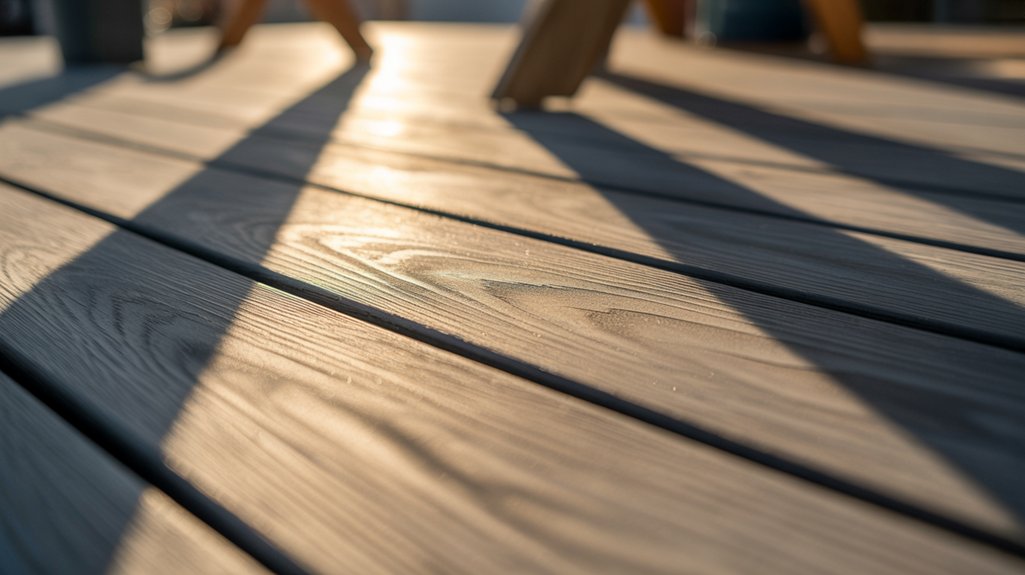
Absolutely, composite decking expands and contracts with temperature changes, and the extent may surprise Orlando homeowners planning their next outdoor project.
Composite deck boards expand and contract in response to temperature changes, driven by the thermoplastic resin that binds them. In Orlando’s humid-subtropical climate, daily solar heat gain and thermal cycling replace freeze-thaw as the primary movement driver, making thermal expansion a year-round design condition rather than a seasonal one. Composite decking is a manufactured board product combining wood fiber or plastic with resin binders, engineered to deliver reduced maintenance and extended service life compared to traditional lumber.
The thermoplastic resin binding composite boards is the primary driver of dimensional movement, expanding and contracting in direct response to surface temperature rather than ambient air temperature. Wood-plastic composites, which combine wood fiber with polyethylene or polypropylene, behave differently than PVC-based composites, with PVC formulations generally exhibiting greater longitudinal movement under equivalent thermal conditions. Color and sun exposure compound these differences, as darker boards absorb more radiant heat and reach higher surface temperatures, increasing the total range of movement across a thermal cycle.
ASTM D7032, the governing performance standard for wood-plastic composite and plastic lumber decking, establishes end-use temperature factors that directly account for dimensional change driven by thermal cycling. Thermoplastic resins—whether polyethylene, polypropylene, or polyvinyl chloride—expand and contract as surface temperatures rise and fall, making thermal movement an inherent material behavior rather than an installation defect. PVC-based composites exhibit greater linear expansion along board length than wood-plastic composites under equivalent heat exposure. In climates like Orlando’s, where surface temperatures on dark-colored boards can climb well above ambient air temperature under direct solar gain, this movement occurs daily rather than seasonally, placing continuous demand on gap spacing and fastener detailing to prevent buckling or fastener stress.
Wood-plastic composites and PVC-based composites expand at measurably different rates along board length, a distinction addressed within the performance framework of ASTM D7032. Wood-plastic composites, which bind wood fiber or flour with polyethylene or polypropylene, are partially stabilized by the wood component, limiting linear thermal movement relative to boards composed entirely of thermoplastic material. PVC-based composites, containing no cellulosic filler, respond more directly to surface temperature change and exhibit greater length-wise expansion under equivalent heat exposure. In Orlando’s humid-subtropical climate, where solar gain drives daily thermal cycling rather than seasonal freeze-thaw, this difference in expansion behavior influences gap spacing requirements, fastener selection, and clip system specification across both composite categories.
Orlando’s climate reframes thermal movement as a daily operational condition rather than a seasonal one, since the region’s 230-plus sunny days and summer surface temperatures consistently drive board expansion and contraction through repeated cycles. Dark-colored boards absorb considerably more radiant heat, reaching surface temperatures well above ambient air, which compounds dimensional movement beyond what installation-temperature gap tables alone anticipate. South- and west-facing deck orientations intensify solar exposure, making color selection and board orientation consequential variables in how effectively a composite deck manages cumulative thermal stress over its service life.
Dark-colored composite deck boards exposed to direct sunlight reach surface temperatures considerably higher than ambient air temperature, a condition that drives thermal expansion independent of seasonal climate change. In Orlando’s humid-subtropical climate, where NOAA climate normals record over 230 sunny days annually and summer ambient highs approach 90 degrees Fahrenheit, solar heat gain becomes a daily design condition rather than a periodic one. Board surface temperatures under direct sun routinely exceed ambient readings by 30 to 50 degrees Fahrenheit, with darker pigments absorbing greater radiant energy and compressing that expansion into shorter daily cycles. ASTM D7032 accounts for end-use temperature in its performance criteria precisely because surface temperature, not air temperature, governs dimensional movement in wood-plastic and PVC-based composite boards.
Dark-colored composite deck boards exposed to direct sun in Orlando can reach surface temperatures 50 degrees Fahrenheit above ambient air temperature, a differential that drives measurable board expansion within a single afternoon cycle. Because NOAA climate normals record over 230 sunny days annually for the Orlando region and summer ambient highs approach 90 degrees Fahrenheit, that heat gain operates as a recurring daily condition rather than a seasonal variable. South- and west-facing deck exposures compound the effect, as boards receive prolonged direct radiation during peak afternoon hours. ASTM D7032 incorporates end-use temperature thresholds into its performance criteria specifically because surface temperature—not recorded air temperature—governs the dimensional movement that determines proper end-gap spacing and fastener system selection.
Proper detailing translates thermal movement from a liability into a managed condition. Manufacturers tie end-gap specifications directly to board length and installation temperature, so a board installed during Orlando’s midday heat requires a different allowance than one set during a cooler morning, because the starting dimension determines how much displacement remains available before stress accumulates. Hidden clip and fastener systems distribute that residual movement laterally rather than concentrating it at fixed points, which prevents the buckling and fastener shear that surface-fastened installations risk when daily thermal cycling compounds over time.
End-gap spacing for composite deck boards is specified by manufacturers as a dimensional tolerance tied to both board length and the ambient temperature at the time of installation. When boards are installed at lower temperatures, manufacturers typically require larger end gaps to accommodate the expansion that will occur as surface temperatures rise — a critical consideration in a climate like Orlando’s, where dark-colored boards in direct sun can reach surface temperatures well above ambient air readings. ASTM D7032 establishes performance parameters that account for these end-use temperature conditions, providing the technical basis manufacturers reference when publishing their installation gap tables. Boards installed without adequate end clearance risk buckling as thermal expansion has nowhere to dissipate across the board length.
Hidden fastener systems engineered for composite decking are designed to allow lateral board movement while maintaining consistent spacing across the deck field. These clip-based systems seat into the board groove or attach along the board edge, anchoring each board to the joist below while permitting the dimensional cycling that solar heat gain drives in Orlando’s humid-subtropical climate. Dark-colored boards in direct sun can reach surface temperatures considerably above ambient air, accelerating the expansion that fastener systems must absorb without transferring stress to the board face or splitting the composite material. ASTM D7032 establishes the performance conditions under which movement control details are evaluated, providing the technical basis for manufacturer specifications governing clip type, joist spacing, and fastener placement relative to board ends.
Composite decking does expand in heat, and the degree of movement depends on board length, resin type, and surface temperature rather than air temperature alone. Dark boards absorb more radiant energy and reach surface temperatures well above ambient, which compounds daily thermal cycling in climates like Orlando’s where sun exposure is consistent and freeze-thaw is fundamentally absent. Manufacturers specify end gaps tied to installation temperature and board length because that spacing directly determines whether seasonal and diurnal movement produces buckling or controlled float within the fastener system.
Composite decking expands when exposed to heat, as the thermoplastic resins binding wood fiber or PVC components respond directly to rising surface temperatures. Dark-colored boards absorb greater radiant heat and reach higher surface temperatures, amplifying the expansion effect. In Orlando’s climate, daily solar cycling makes thermal movement a routine condition rather than a seasonal one.
End-gap spacing for composite deck boards typically ranges from 1/8 inch to 1/4 inch, with side gaps running 1/4 inch to 3/8 inch depending on board length and installation temperature. Higher installation temperatures require smaller gaps, since boards are already partially expanded. Manufacturer specifications tied to ASTM D7032 govern exact requirements, and Orlando’s daily thermal cycling makes precise gap detailing a consistent performance factor rather than a seasonal consideration.
Composite decking does not warp the way natural wood does, but it can bow or buckle when thermal expansion is improperly managed at installation. Dark-colored boards absorb more radiant heat, reaching higher surface temperatures and expanding further. Correct end-gap spacing and engineered fastener systems, specified by manufacturers, prevent visible distortion under Orlando’s intense daily solar cycling.
Dark composite deck boards reach higher surface temperatures than lighter-colored boards because they absorb more radiant heat. In sun-intensive climates, surface temperatures can exceed air temperature considerably, amplifying daily thermal expansion cycles. Color selection thus functions as a direct thermal management variable, influencing how much movement mitigation detailing—end-gap spacing, hidden clips, fastener systems—a given installation requires.
Orlando’s Lake Nona medical corridor, the estate lots of Dr. Phillips, and the lakefront parcels along Butler Chain of Lakes share sandy, well-drained Orlando-series soils and Florida Building Code high-wind provisions that directly condition how outdoor structures are engineered and detailed. Backyard Paradiso installs composite decking across these corridors, applying manufacturer-specified end-gap tolerances and clip systems calibrated to the daily thermal cycling that Orlando’s humid-subtropical climate produces in place of seasonal freeze-thaw movement. Consultations are available by appointment for homeowners evaluating composite deck installation. Investment in properly detailed composite decking is framed through service life, reduced maintenance overhead, and the functional outdoor square footage added to a property rather than through upfront cost comparisons. Backyard Paradiso extends the same installation approach to neighboring markets including Kissimmee, Windermere, and Winter Garden, where similar solar exposure and regulatory conditions apply.