Physical Address
304 North Cardinal St.
Dorchester Center, MA 02124
Physical Address
304 North Cardinal St.
Dorchester Center, MA 02124
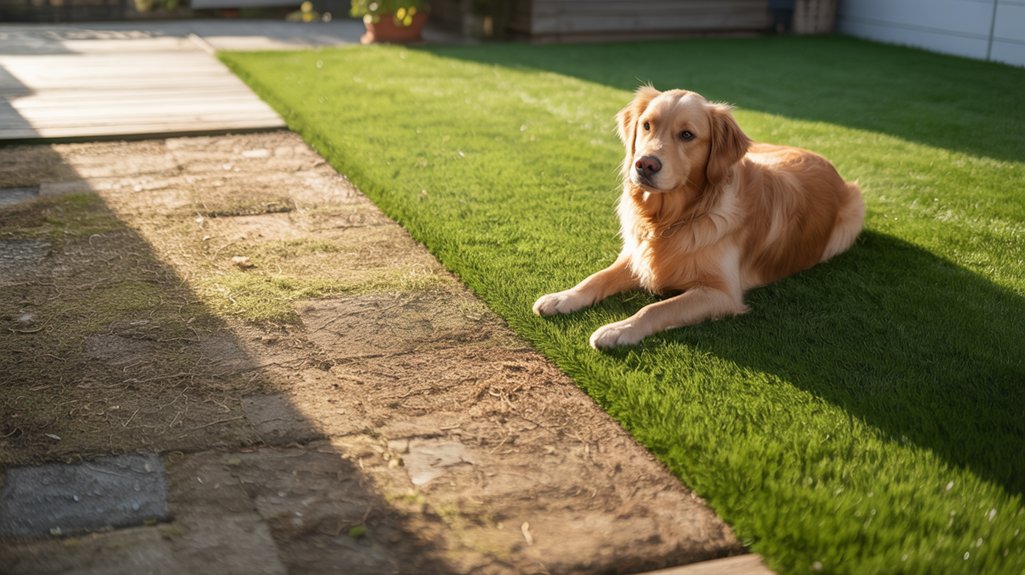
Naturally, artificial grass lasts 15–20 years in Southwest Florida, but several critical factors determine whether yours reaches that lifespan.
Quality artificial grass installed in Southwest Florida carries a functional lifespan of 15 to 20 years when UV-stabilized fibers and proper drainage specifications are met. Naples’ combination of intense ultraviolet exposure, 54 annual inches of monsoon rainfall, and salt-air proximity represents the primary aging environment that conditions that range. Artificial grass is a synthetic surface system engineered to replicate the functional and aesthetic properties of natural turf without requiring irrigation, mowing, or seasonal replanting.
UV degradation drives synthetic turf aging in USDA Zone 10 more decisively than any other variable, because the combination of roughly 265 annual sunny days, intense low-latitude ultraviolet intensity, and reflective Gulf Coast light loads accelerates polymer breakdown at rates measurably higher than in temperate climates. Fiber composition determines how long a product resists that exposure — polyethylene formulations carrying UV stabilizers retain tensile strength and color fidelity across the full 15-to-20-year service window, while insufficiently stabilized fibers begin to show brittleness and pile collapse well before that threshold. ASTM F1551 provides the characterization framework against which fiber performance, backing integrity, and drainage capacity are evaluated, making it the practical instrument through which material quality translates into service life under Southwest Florida conditions.
Naples, Florida falls within USDA Hardiness Zones 10a–10b, a designation that correlates with near-year-round solar intensity and ultraviolet radiation loads that exceed those of virtually every other major U.S. metropolitan market. Ultraviolet degradation, rather than mechanical wear or freeze-thaw cycling, is the dominant aging mechanism for synthetic turf fibers in this climate. Prolonged UV exposure breaks down the polymer chains within polyethylene fibers, causing color shift, fiber brittleness, and eventual pile collapse. The Synthetic Turf Council specifies UV-stabilized fiber formulations precisely to counteract this degradation pathway, and in a market like Naples — where approximately 265 sunny days per year compound the effect of Gulf Coast salt-air exposure — adherence to that specification is the single factor most directly tied to whether an installation achieves its full 15-to-20-year service life.
ASTM F1551 establishes the thorough characterization framework against which synthetic turf surfaces are evaluated, covering fiber tensile strength, pile height retention, and backing integrity as measurable performance indicators rather than marketing claims. Polyethylene fibers specified at pile heights between 1.5 and 1.75 inches carry distinct load-bearing and UV-exposure profiles that directly determine how long a surface maintains functional density under Naples conditions. Backing quality governs the structural relationship between fibers and base, and perforated backing systems engineered for high vertical drainage rates are the specification variable most critical to installation longevity in a climate that delivers approximately 54 inches of annual rainfall concentrated in a June-through-September monsoon. Installations where backing integrity fails allow lateral fiber migration and base saturation, collapsing the surface geometry that ASTM F1551 characterization is designed to preserve.
When a synthetic turf installation is executed correctly, the compacted aggregate base becomes the most durable component of the system — outlasting the fiber layer by decades. Collier County’s sandy coastal soils, mainly Hydrologic Soil Groups A and B, achieve stable bearing capacity when compacted to 90–95 percent of Modified Proctor density, and that structural condition holds indefinitely absent hydrostatic disruption or mechanical disturbance. What determines whether that base performs through Naples’ 54-inch rainfall year is vertical drainage capacity: backing permeability and aggregate gradation must collectively clear stormwater fast enough that hydraulic pressure never compromises compaction or undermines the installation perimeter.
ASTM D1557 Modified Proctor density governs compaction standards for synthetic turf aggregate base installation, with Collier County specifications calling for 90–95 percent of Modified Proctor density across the 3–4 inch compacted aggregate layer. At that compaction threshold, the structural base effectively reaches a stable state that resists settlement, lateral displacement, and hydraulic disruption regardless of the monsoon volumes Naples receives each June through September. The sandy coastal sediments classified as Hydrologic Soil Groups A and B that predominate on the barrier ridges and estate corridors along Gordon Drive and Gulf Shore Boulevard drain readily, meaning the base encounters none of the freeze-thaw cycling that degrades aggregate work in northern climates. Where the base is installed correctly over these Collier County soils, it functions as a permanent substructure — outlasting multiple turf surface replacements across a property’s ownership history.
Perforated synthetic turf backing specified for residential installations must transmit drainage volumes that, across Naples’s June–September monsoon window, reflect NOAA climate normals of approximately 54 inches of annual rainfall concentrated into near-daily afternoon thunderstorm events. That hydraulic demand is sustained rather than episodic, which means the backing’s drainage rate functions as a continuous performance specification rather than a worst-case design allowance. The compacted aggregate base beneath — installed to 90–95 percent of ASTM D1557 Modified Proctor density over the high-infiltration Hydrologic Soil Group A and B sands that predominate along Gordon Drive and Gulf Shore Boulevard — transmits that volume laterally and vertically without pressure buildup against the turf surface. Because the base itself neither saturates nor cycles through freeze-thaw stress, it reaches structural equilibrium and holds it indefinitely, outlasting the fiber surface above it across multiple replacement cycles.
Artificial grass doesn’t wear uniformly—traffic concentrates along predictable corridors, infill migrates toward low points, and the fibers that receive the heaviest load cycles flatten before the surrounding field shows meaningful degradation. Coastal installations add variables that inland projects don’t contend with: salt-air oxidation accelerates fiber brittleness at the surface, and pool-adjacent areas face repeated exposure to chlorine and pH-adjusted water that can compromise backing adhesion over time. Grooming cycles that redistribute infill and restore pile orientation are what extend the serviceable life of those high-traffic zones, and the material specification—particularly UV stabilization and backing chemistry—determines how well the system holds up against Naples’ compounding coastal stressors before replacement becomes the rational choice.
Synthetic turf fiber bundles subjected to repeated unidirectional foot traffic lose measurable pile height through a mechanical process called traffic lay-down, in which fiber stems bend and compact along the dominant travel vector rather than recovering to vertical. Infill displacement accelerates this process, as compacted zones shed crumb rubber or silica sand toward lower-traffic margins, leaving high-use paths with reduced cushioning and increased fiber-to-fiber abrasion. In Naples installations, the June–September monsoon season compounds migration by mobilizing loosened infill through the perforated backing faster than in drier climates, making grooming frequency a functional specification rather than an aesthetic preference. Periodic cross-directional power brushing redistributes infill and restores fiber orientation, extending serviceable life toward the upper range of the 15–20-year window that UV-stabilized polyethylene systems carry in Southwest Florida conditions.
Coastal installations within the Naples estate corridors along Gordon Drive and Gulf Shore Boulevard face chloride deposition rates that accelerate oxidative degradation in synthetic turf fiber binders and backing adhesives. Salt aerosol carried inland from the Gulf combines with pool water splash-out — which typically carries residual chlorine concentrations well above ambient — to create a dual-chemical environment that attacks backing latex and fiber coatings simultaneously. UV-stabilized polyethylene fiber, specified per Synthetic Turf Council guidance, resists surface chalking longer than unstabilized alternatives, but backing delamination driven by chloride penetration can advance replacement timelines independent of fiber condition. When pile height loss exceeds roughly one-third of original specification, infill containment fails at a rate that grooming cycles can no longer correct, marking the functional threshold at which replacement recovers more value than continued maintenance.
Homeowners in Naples’ estate corridors — from Port Royal to Pelican Marsh — tend to ask the same cluster of questions once they begin evaluating artificial grass as a long-term investment. Florida’s UV intensity, the monsoon-season drainage load, infill maintenance intervals, and Collier County’s permit requirements each carry practical consequences that affect how an installation performs over its 15-to-20-year service life. The answers to these questions aren’t incidental; they’re the variables that separate a system that holds through decades of Gulf Coast conditions from one that degrades well before its time.
Florida sun does shorten artificial grass lifespan when fiber is not manufactured with UV stabilization, but properly specified UV-stabilized polyethylene maintains structural integrity across the full 15-to-20-year service window despite roughly 265 annual sunny days and intense Gulf Coast ultraviolet exposure. Fiber degradation accelerates most rapidly in southwest-facing installations with no canopy relief. Synthetic Turf Council guidance governs UV-stabilization specifications relevant to Naples estate corridor conditions.
Artificial grass survives Naples’ rainy season by design, provided the installation includes perforated backing and a properly compacted aggregate base graded at a minimum two percent slope away from structures. Collier County’s sandy HSG-A and HSG-B soils naturally accelerate vertical drainage beneath that base layer. Installations along drainage-sensitive corridors such as Pelican Marsh and Aqualane Shores benefit most from drainage-rate specifications matched to the monsoon’s near-daily thunderstorm intensity.
Collier County typically does not require a building permit for residential artificial turf installations. However, lots of one acre or greater trigger a Vegetation Removal Affidavit, and any site work affecting surface-water drainage falls under South Florida Water Management District Environmental Resource Permit jurisdiction. Collier County Growth Management administers these requirements through its accessory-structure and stormwater review processes.
Artificial grass infill typically requires replenishment every three to five years under normal residential use. In Naples, the monsoon season‘s intense rainfall volume and high UV exposure accelerate infill displacement and degradation at rates exceeding those seen in temperate climates. Zeolite and antimicrobial infill formulations specified for pet installations along estate corridors such as Pelican Bay and The Moorings may require more frequent assessment.
Residential artificial grass installations in Naples must satisfy Collier County Growth Management permitting requirements, meet ASTM F1551 surface characterization standards, and achieve base compaction at 90–95 percent of ASTM D1557 Modified Proctor density while maintaining a minimum two percent site drainage slope per IRC provisions. Backyard Paradiso brings that technical framework to every artificial grass project, applying UV-stabilized fiber specification, high-drainage backing systems, and aggregate base construction suited to the sandy Collier County soils and the intense June–September monsoon load. Consultations are available by appointment from the Naples office. The investment recovers through resale value, functional square footage equivalence, and substantially expanded usable hours across the long Naples outdoor season. Backyard Paradiso serves Port Royal, Old Naples, Aqualane Shores, Royal Harbor, Park Shore, The Moorings, Pelican Bay, Pelican Marsh, and the Gordon Drive, Gulf Shore Boulevard, and Vanderbilt Beach Road corridors.